
Gypsy Moth Lymantria dispar
This species became extinct in Norfolk in or soon after the 19th century but in the last few years has recolonised (see Norfolk Moths). I have deployed Gypsy Moth pheremone lure on numerous occasions but had only successfully lured in Black Arches Lymantria monacha until 2026. Following a tip-off that two had been attracted to lure in Fakenham, I deployed the lure again in 2026 and caught this Gypsy Moth overnight (and no Black Arches this time). I didn't realise - or had forgotten - how much larger they are (or at least this one was) than most Black Arches.
 (1).jpg)
 (2).jpg)
 (3).jpg)
 (4).jpg)
Gypsy Moth Lymantria dispar, North Elmham (Norfolk, UK), 24th July 2026
Four days later (during the afternoon) this appeared in my pheremone lure trap. The trap was set with the Raspberry Clearwing lure and I'd not only changed the lure over after the one above, but also the cage the lure sits in. Presumably despite that some of the pheremone scent remained in or on the trap.
 (1).jpg)
 (2).jpg)
Gypsy Moth Lymantria dispar, North Elmham (Norfolk, UK), 28th July 2026
A second individual appeared near the trap overnight.
 (1).jpg)
 (2).jpg)
second Gypsy Moth Lymantria dispar, North Elmham (Norfolk, UK), 28th July 2026
Although the above individuals were the first I'd caught, I had previously seen one caught be someone else. Chris Mills messaged me from France to say that his mate who was staying in his house in Themelthorpe had caught one, and would I have a chance to pop over and witness it? At the time there had only been four previous post-extinction records in Norfolk so this was a much more significant record than it is now, so I was happy to pop over.
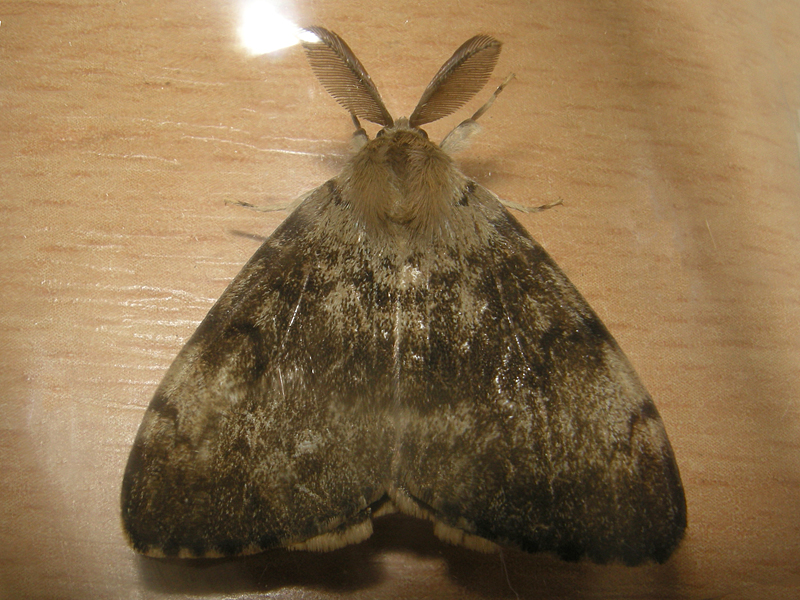
Gypsy Moth Lymantria dispar, Themelthorpe (Norfolk, UK), 18th August 2019